
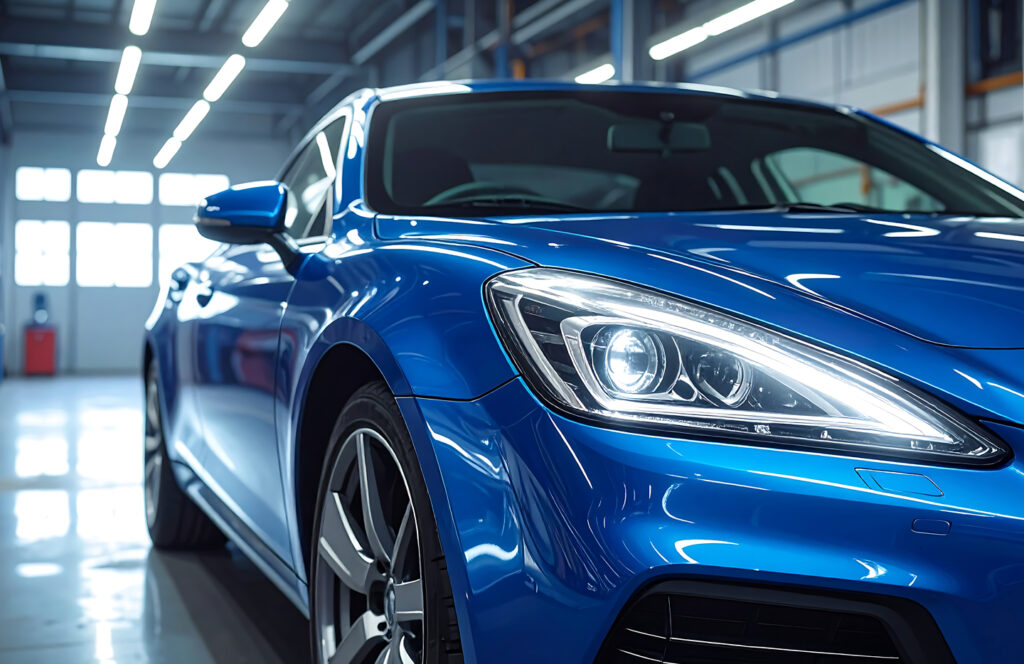
Prestige and late-model vehicles are not repaired differently simply because of the badge. What changes the job is the vehicle’s construction, materials, electronics, finish, repair information and parts requirements. These factors are common in premium vehicles and can make a seemingly modest collision technically demanding.
The repair begins with model-specific information
Collision repair is not a universal sequence that can be applied to every model. The repairer needs current vehicle-maker information for the damaged area, including permitted repair or replacement methods, measurement points, joining techniques, material restrictions, corrosion protection and calibration requirements.
I-CAR’s best-practice guidance repeatedly directs repairers to follow vehicle-maker procedures. VicRoads also states that written-off vehicles must be repaired in accordance with manufacturer instructions and notes that an authorised repairer may be needed when specialised equipment or knowledge is required.
Mixed materials require different skills and equipment
Prestige vehicles may use aluminium, high-strength and ultra-high-strength steel, composites and structural adhesives alongside conventional materials. Each has limits on straightening, heat, welding, sectioning and contamination.
For example, aluminium work requires controls that differ from steel repair, including appropriate tools and attention to cross-contamination. Ultra-high-strength steel components may have strict repair or replacement requirements. The correct method depends on the exact component and current OEM procedure.
Sensors and electronics expand the repair plan
Cameras, radar, parking sensors and control modules can sit behind windscreens, grilles, bumpers, mirrors and body panels. Comfort and convenience systems may also be connected through complex vehicle networks.
I-CAR’s ADAS process includes identifying fitted systems, checking mounting areas and related damage, carrying out diagnostic scans when possible, consulting OEM calibration requirements and completing prescribed calibrations and post-repair checks. A clean cosmetic finish alone does not verify this work.
Paint matching can be highly technical
Premium finishes can include metallic, pearl, multi-stage, tinted clear and matte systems. Achieving a consistent result may require colour identification, test spray-outs, controlled application and blending based on the paint system and panel layout.
Colour is only part of the result. Texture, gloss, metallic orientation, edge coverage and the transition between repaired and adjacent panels all affect how the finish appears in different light.
Parts decisions deserve a clear explanation
The estimate should identify the parts proposed and reflect the policy, availability and repair requirements. Genuine, alternative and recycled parts are not automatically interchangeable for every application. Fit, material, sensor compatibility, repair procedure and insurer terms can all matter.
Ask the repairer or insurer to explain the proposed part type and any effect on warranty or calibration. If the manufacturer specifies a particular component or one-time-use fastener, that instruction should form part of the repair plan.
Final verification goes beyond appearance
A prestige repair should be evaluated against the operations completed. Checks may include dimensional accuracy, panel gaps, closures, corrosion protection, refinishing, diagnostic results, ADAS calibration, wheel alignment, warning messages, fluid levels and a road test where applicable.
Customers should be able to ask what was repaired, what was replaced, which specialist procedures were required and what documentation is available.
How to assess a repairer for a prestige vehicle
Look for evidence of access to current repair information, technicians trained for the work, suitable measuring and joining equipment, appropriate refinishing capability, a process for diagnostics and calibration, and clear communication with both the customer and insurer. Manufacturer approval or certification can be relevant for some marques, but verify the exact status rather than relying on broad claims.
A careful assessment before work begins
Bell Automotive Group repairs a wide range of vehicles and begins with a detailed assessment of the damage and required process. For a prestige or technically complex vehicle, contact us with the make, model, year, insurer and a description of the damage so the appropriate location and next step can be discussed.
Speak with our Preston repair team on (03) 9478 8370 or our Thomastown repair team on (03) 9462 2234. For other areas, view our workshop locations.
Related reading: ADAS Calibration After a Collision: Why It Matters and Insurance Smash Repairs: How the Process Works.
Sources
I-CAR Australia: Best practices in collision repair
I-CAR Australia: Gold Class collision training and ADAS collision repair diagnostics process
VicRoads: Repairing a written-off vehicle
Repair requirements are specific to the vehicle and damage. Brand approvals, insurer arrangements and parts terms should be verified for the individual repair.