
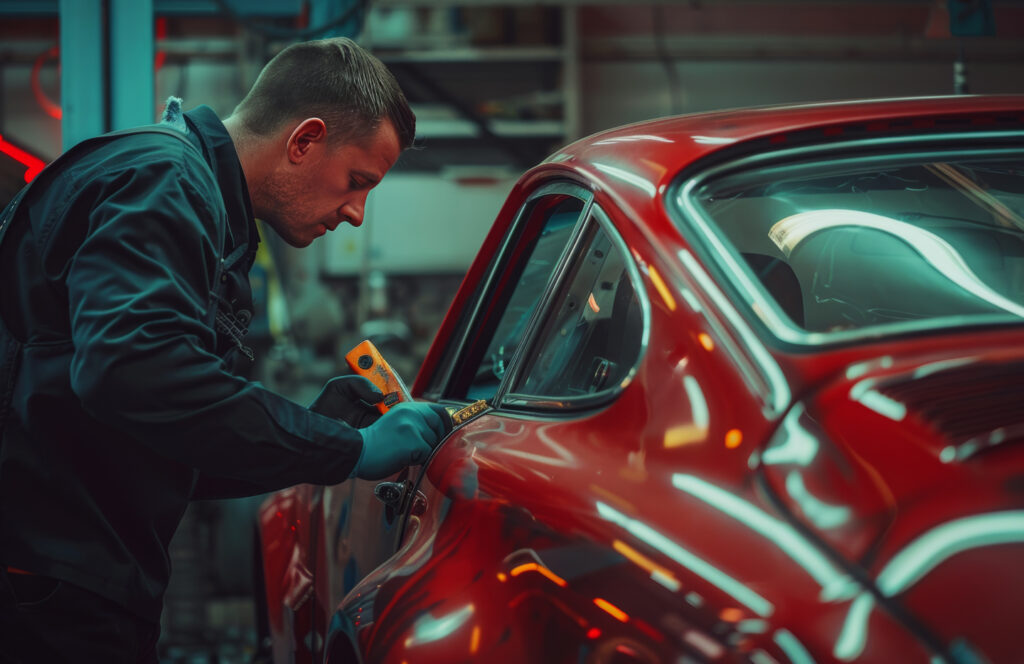
When a body panel is damaged, “repair or replace?” is not simply a question of which option looks cheaper. A sound decision considers the panel’s function, material, damage severity, access, corrosion protection and the vehicle maker’s published repair instructions.
What panel repair involves
Panel repair retains the original component and restores its shape using methods suited to the material and damage. Depending on the job, technicians may use controlled metal straightening, pulling, welding, adhesive or plastic-repair processes, surface preparation and refinishing. Paintless dent repair may suit some shallow dents where the paint and panel structure remain appropriate for that method.
Repair can preserve more of the original vehicle, reduce the number of replacement parts and sometimes shorten the job. But those benefits matter only when the repair can be performed safely and within the limits set for that component.
What panel replacement involves
Replacement removes the damaged component and installs another part. Bolt-on panels such as some guards, bonnets and doors follow a different process from welded structural or body-side components. Welded panels may require measuring, controlled cutting at permitted locations, specific joining methods, corrosion protection and verification of adjacent structure.
Replacement may be required when damage is too extensive for an approved repair, a critical area is distorted, the material cannot be restored within specification, or the manufacturer’s procedure directs replacement.
The vehicle maker’s procedure is decisive
Modern vehicles combine mild, high-strength and ultra-high-strength steels, aluminium, plastics, composites, adhesives and tailored reinforcements. Similar-looking panels can have very different repair restrictions.
I-CAR advises following vehicle-maker procedures and warns against using general sectioning assumptions on late-model vehicles. If no sectioning procedure is published, I-CAR’s guidance is not to create an unapproved sectioning joint; the complete part should be replaced at factory seams unless the manufacturer permits a partial replacement.
VicRoads likewise states that written-off vehicles must be repaired in accordance with manufacturer instructions and notes that specialised knowledge or equipment may be required. Although not every collision repair involves a written-off vehicle, this illustrates why model-specific information matters.
Factors that influence the decision
Panel role: A cosmetic outer panel is assessed differently from a rail, pillar, reinforcement or mounting area that contributes to structure or safety-system positioning.
Material: Heat, pulling and welding limits vary. A method suitable for one steel grade may be unsuitable for ultra-high-strength steel or aluminium.
Damage type: Sharp creases, stretching, tearing, previous repairs and damage close to seams or mounting points can change repairability.
Access and joining: Replacement can affect adjacent trim, glass, wiring, corrosion protection and electronic systems. Repair can also require dismantling to reach the rear of a panel or confirm concealed damage.
Finish and corrosion control: The work is not complete when the shape is restored. Refinish preparation, seam sealing, cavity protection and other corrosion-prevention steps must be reinstated as required.
Why the first estimate can change
An initial visual estimate is based on what can be seen. Dismantling may reveal torn brackets, displaced reinforcements, damaged sensor mounts or distortion in an adjacent panel. The repairer may then revise the plan and seek supplementary insurer approval where relevant.
This is not automatically a sign that the first assessment was poor. Some collision damage is genuinely hidden until components are removed and the vehicle can be measured or scanned.
What to ask your repairer
Ask why repair or replacement is proposed, which manufacturer procedure applies, what part type will be used, whether structural measurement is required, how corrosion protection will be restored, and what quality checks will be completed. The answer should relate to your vehicle and damage—not a generic rule.
Get an informed damage assessment
Bell Automotive Group assesses each vehicle before recommending a repair plan. Our teams consider visible and underlying damage, repair information, equipment requirements, parts and refinishing so customers can understand why a particular method is proposed.
Speak with our Preston repair team on (03) 9478 8370 or our Thomastown repair team on (03) 9462 2234. For other areas, view our workshop locations.
Related reading: ADAS Calibration After a Collision: Why It Matters and Prestige Car Smash Repairs: What Makes Them Different?.
Sources
I-CAR Australia: Uniform Procedures for Collision Repair
I-CAR Australia: Full-body sectioning should not be done
VicRoads: Repairing a written-off vehicle
The correct method is vehicle- and damage-specific. This article does not replace current manufacturer repair information or a physical assessment.